
Autumn Debris and the Approaching Threat to Rooftop Systems
At Scully's Air, we know firsthand that understanding the hidden vulnerabilities of roof-mounted HVAC units before Modesto's winter rains is critical for property owners as mid-fall approaches. October brings a distinct shift in the Central Valley weather. While the crisp air feels like a welcome relief from the summer heat, dry autumn winds are already blowing fallen leaves across flat roofs. This debris creates unseen drainage blockages inside packaged heating and cooling systems. The core problem is that these blockages remain completely hidden from view until the first heavy downpour hits. Right now, you face a critical decision point: knowing how to safely inspect your rooftop exterior for debris buildup, and knowing when to call a professional before the cold front brings serious precipitation. Taking proactive steps during this brief transition period is the difference between a secure building envelope and an unexpected winter leak.
For comprehensive support in preparing your system, explore our Heating Services to ensure your equipment is ready for the changing season.
During mid-fall, typically in October before Central Valley winter rains begin, the accumulation of organic matter accelerates. Leaves, twigs, and dust gather in the corners of flat roofs and press against the intake vents of your HVAC equipment. Because a rooftop system sits directly in the path of the elements, it absorbs the full impact of this seasonal debris drop. If left unaddressed, the dry material waiting inside your unit will turn into a destructive sludge the moment the heavy rains arrive.
Understanding the Unique Design of Packaged HVAC Units
To protect your property, it helps to understand exactly how your rooftop equipment differs from a standard residential air conditioner. Rooftop package units house all heating, cooling, and air-handling components inside a single, weather-exposed cabinet. Unlike ground-level split systems—which keep the sensitive blower and furnace components safely indoors—a package unit places everything on the roof.
This all-in-one design makes internal drainage pathways absolutely critical. When it rains in Modesto CA, the water that hits the cabinet must be precisely diverted away from the internal electronics and the ductwork below. If you need assistance verifying your system's integrity, our team at Scully's Air agrees that scheduling a professional Modesto heating service is the safest approach.
• Component Location — Rooftop Package Unit: All components housed in one outdoor cabinet on the roof. — Ground-Level Split System: Condenser outside; furnace and blower safely indoors.
• Exposure to Elements — Rooftop Package Unit: 100% exposed to rain, wind, and direct falling debris. — Ground-Level Split System: Only the condenser is exposed; critical airflow components are protected.
• Drainage Mechanism — Rooftop Package Unit: Relies on internal pans and weep holes to expel rainwater and condensate. — Ground-Level Split System: Indoor condensate drains into a floor drain or exterior line.
• Vulnerability to Fall Debris — Rooftop Package Unit: High risk of leaves entering the cabinet and clogging internal drains. — Ground-Level Split System: Leaves may block the outdoor coil, but rarely threaten indoor drainage.
The Anatomy of a Weather-Exposed Cabinet
A package unit features large intake vents, exhaust panels, and internal drain pans designed to manage moisture. The cabinet is tightly sealed to protect the mechanical parts, but this sealed nature also hides internal debris accumulation from casual observation. Small leaves and pine needles can slip through the outer louvers and settle in the bottom of the unit. Because you cannot see through the solid metal panels, a unit that looks perfectly clean on the outside might be holding a thick layer of debris on the inside, quietly waiting for the winter rains to arrive.
The Sequence of Danger: Dry Winds, Falling Leaves, and Heavy Rains
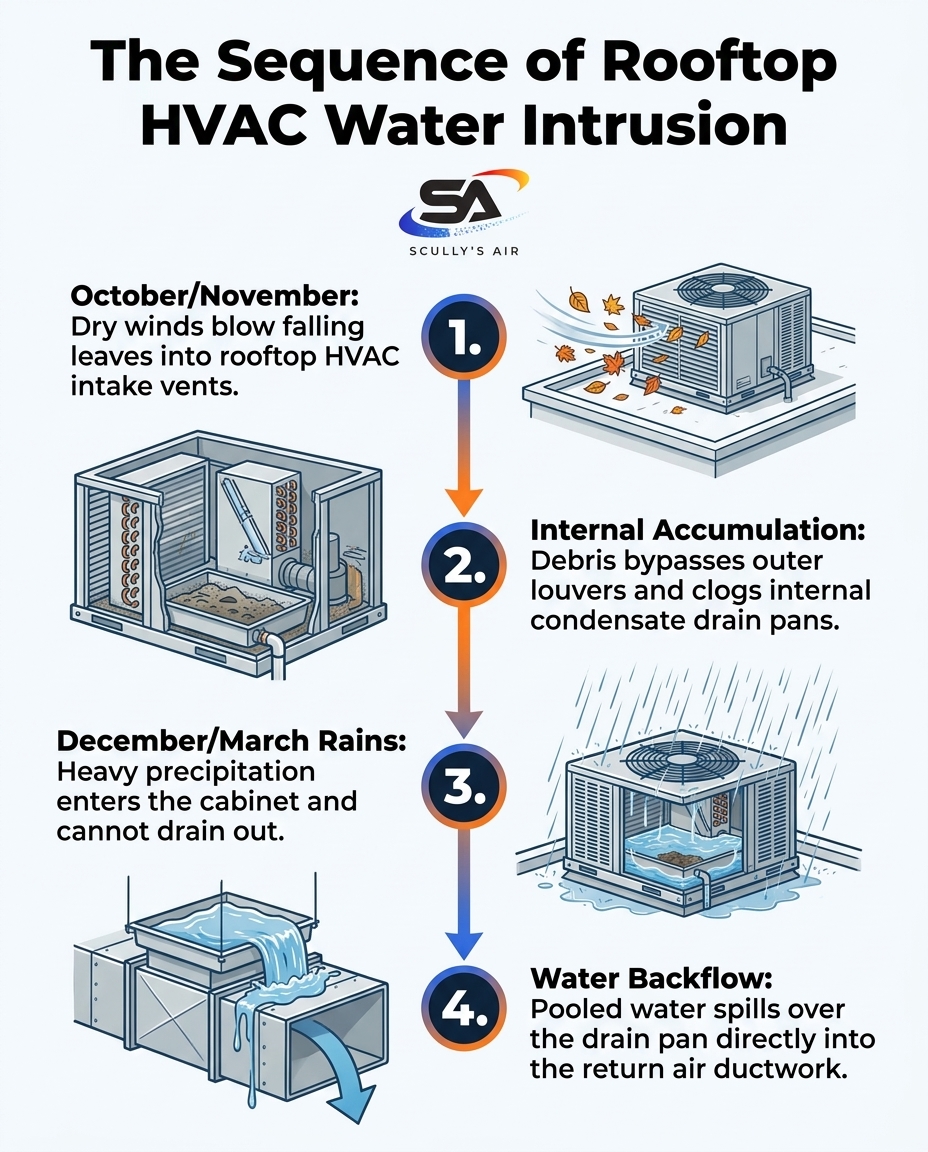
The problem: In our years of responding to emergency calls across Modesto, we've seen how the transition from dry Central Valley autumns to heavy winter precipitation creates a perfect storm for rooftop water damage. Throughout October and November, local trees experience peak leaf fall.
The cause: Dry autumn winds sweep across the flat expanses of commercial and residential roofs. These winds blow the fallen leaves directly into the path of HVAC intake vents. The equipment's blower motor creates a vacuum that actually pulls smaller debris past the exterior guards. As this material settles inside the cabinet, it blocks the internal condensate drains and rain weep holes. Because the weather remains relatively dry during this phase, the blockage causes no immediate symptoms.
The solution: Recognizing this exact sequence allows you to intervene before the damage occurs. Between December and March, the weather shifts dramatically. The moment the heavy rains begin across the Modesto service area, the accumulated dry debris inside the unit acts like a sponge. It absorbs the rainwater, expands, and turns into a sludgy blockage that completely seals off the drainage pathways. To stop this sequence, the internal cabinet must be cleared during the brief window in mid-fall, right before the Central Valley winter rains begin.
How Internal Drainage Blockages Lead to Water Intrusion
Every rooftop package unit is engineered to handle rain. The cabinet features internal condensate drains and strategically placed weep holes that allow water to flow through and exit the system safely. However, these drainage pathways are relatively narrow. When autumn debris infiltrates the cabinet, it doesn't take much to create a dam.
As rainwater enters the top and sides of the unit during a storm, it flows down toward the base pan. If the weep holes and drain lines are blocked by leaf sludge, the water has nowhere to go. It begins to pool inside the cabinet, rising higher with every hour of rainfall. Just like clogged condensate drains during the summer cooling season, a blocked rain drain leads to immediate overflow.
The Hidden Path of Backflowing Water
The greatest danger of internal pooling is where the water eventually goes. A package unit sits directly over a large opening in your roof, connecting straight to your return and supply air ductwork. Once the water level inside the cabinet rises above the internal lip of the duct connection, it backflows directly into the building.
Signs of internal water backflow include:
• Ceiling stains: Brown water spots appearing on ceiling tiles directly below the HVAC unit.
• Dripping vents: Water physically dripping from the supply registers inside the building.
• Musty odors: A sudden damp, mildew-like smell circulating through the air conditioning system.
• Gurgling sounds: Unusual noises coming from the ductwork when the blower motor engages.
By the time you notice these symptoms inside your Modesto CA property, the ductwork is already saturated, compromising your indoor air quality and requiring extensive repairs.
The Structural Risks of Water Pooling Around HVAC Equipment
The threat of autumn debris extends beyond the inside of your HVAC cabinet. Leaves and branches also accumulate around the exterior base of the unit, creating severe risks for the roof itself. Most flat roofs rely on a slight slope and strategically placed scuppers or roof drains to shed water. When windblown debris gathers around the large, square footprint of a package unit, it often blocks the surrounding roof drains.
Our technicians frequently encounter scenarios where standing water pools around the base of the equipment. Prolonged exposure to standing water accelerates rust and corrosion on the metal cabinet. More importantly, it deteriorates the weather stripping and the base rail of the unit.
Your rooftop system sits on an elevated metal box called a "curb." The curb is designed to keep the unit raised above the expected water line during a storm. However, if debris prevents the roof from draining, the pooled water can rise higher than the curb's flashing. When this happens, water seeps under the unit and straight into the building envelope. Clearing this exterior debris during mid-fall, usually in October before Central Valley winter rains, is essential to protecting the structural integrity of both the unit and the roof.
Safe Visual Inspections vs. Professional Intervention
As a property owner, your role in winterizing a rooftop unit is strictly observational. The elevation, the electrical components, and the sealed nature of the cabinet make DIY maintenance highly dangerous. You can safely perform visual inspections from a distance, but you must know where to draw the line.
Safe visual inspection steps:
• Check the perimeter: Look for heavy leaf buildup around the base of the unit and the surrounding roof drains.
• Inspect the louvers: Check the exterior intake vents for visible debris trapped against the metal fins.
• Look for standing water: Note any areas where water seems to pool near the equipment after a light rain.
You must strictly avoid opening the sealed package unit cabinet or attempting to clear internal drainage pathways yourself. Attempting DIY interventions on commercial or residential rooftop equipment carries severe risks, including high-voltage electrical hazards, the danger of falling from the roof, and the likelihood of voiding your manufacturer's warranty.
Why Internal Cabinet Clearance Requires a License
If debris is visible inside the louvers, if water is pooling, or if the unit simply hasn't been cleared since summer, professional intervention is required. The Scully's Air team brings deep local expertise in safely servicing hard-to-reach roof-mounted package units, ensuring the job is done right without risking your safety or your equipment. Licensed technicians use specialized tools to clear sludge from internal drain pans without bending the delicate fins of the evaporator coil. Furthermore, professional maintenance ensures that all weather seals and cabinet panels are properly re-secured and watertight after the cleaning is complete. If you spot warning signs during your visual check, scheduling HVAC repair in Modesto is the right next step.
Preparing Your Rooftop Unit for the Winter Shift
We always advise our customers that taking action before the weather turns is the most effective way to prevent costly water damage. By following a structured preparation plan in mid-fall, usually in October before Central Valley winter rains, you ensure your equipment is ready to handle whatever the season brings.
1. Schedule a targeted late-fall inspection: Request a professional tune-up specifically focused on internal drainage clearance and weather seal integrity.
2. Coordinate roof and gutter cleaning: Ensure that your HVAC maintenance aligns with your routine roof sweeping. A clean HVAC unit won't stay clean if the rest of the roof is covered in leaves.
3. Monitor after high-wind events: After a major autumn windstorm, perform a safe visual check from the ground or a secure access point to ensure new debris hasn't piled up against the unit.
4. Verify the weather stripping: Ask your technician to confirm that the seals between the unit and the roof curb are intact and free of dry rot.
Ensuring optimal airflow and unobstructed drainage now prevents emergency breakdowns and sudden leaks during the coldest, wettest months of the year.
Frequently Asked Questions About Rooftop HVAC Weatherization
Why is my rooftop AC leaking water when it rains?
When customers call us about a leaking rooftop AC during rain, it usually indicates a clogged internal drain pan or compromised weather stripping. When autumn leaves bypass the exterior vents, they block the weep holes designed to let rainwater escape. As the water pools inside the sealed cabinet, it eventually rises high enough to spill over into your return air ductwork, causing leaks inside the building.
How does rain affect a rooftop HVAC unit?
Rain tests the integrity of a rooftop unit's cabinet seals and internal drainage pathways. These systems are engineered to withstand heavy precipitation, provided their internal drains are completely clear. If the unit is poorly maintained or clogged with debris, rain quickly turns from a normal environmental factor into a major source of internal flooding and rust.
Do rooftop HVAC units need to be covered in winter?
No, you should never cover a rooftop HVAC unit, as it traps moisture and encourages rust. Covering the equipment also creates a sheltered environment that attracts rodents and pests seeking warmth. Instead of covering the unit, focus on keeping the exterior clear of debris and ensuring the internal drains are professionally cleaned before winter.
How do you maintain a packaged HVAC unit?
Maintaining a packaged unit requires clearing external debris from the roof and scheduling professional internal cleanings. Because all components are housed in one exposed cabinet, a licensed technician must inspect the internal drain pans, test the electrical connections, and verify that the cabinet's weather seals remain watertight.
Why are autumn leaves particularly dangerous for commercial rooftop HVAC systems?
Autumn leaves easily bypass intake louvers and turn into a thick sludge that blocks internal drains. On large commercial flat roofs, wind sweeps massive amounts of leaves directly against the HVAC equipment. When the heavy rains follow shortly after, this dry debris instantly creates a dam, forcing water straight down into the commercial space below.
What is the difference in winter preparation for a package unit versus a split system?
A package unit requires extensive weather-seal and internal drain inspections, while a split system focuses primarily on the indoor furnace. Because a package unit sits entirely outside, a technician must ensure the cabinet is completely watertight and free of organic debris to prevent rain from entering the building's ductwork.
Secure Your Rooftop System Before the Rains Arrive
The critical window of opportunity is closing. The period in mid-fall, typically in October before Central Valley winter rains arrive, is the exact right time to address the hidden vulnerabilities of your rooftop equipment. Once the heavy storms begin, any unseen blockages inside your package unit will quickly reveal themselves through water damage and system failures.
Do not wait for a leak to confirm that your internal drains are clogged. The right next step is to have those internal drainage pathways professionally cleared and the cabinet seals verified by a licensed technician. By scheduling a thorough inspection now, you ensure your property remains protected from unexpected water intrusion, giving you confidence that your system is fully prepared for the long, wet winter ahead.


